
Large Low Voltage VFDs
Buying a larger low voltage VFD follows most of the same processes and considerations as any other VFD, which you can learn about in our VFD Buying Guide. Larger drives bring a few new concerns and make others more critical. At 5 HP, choosing the wrong configuration is annoying. At 750 HP, it’s an expensive engineering mistake, often around one of several topics:
- Transportation and installation
- Site capability
- Harmonic mitigation
- Output filtering
But first, let’s align some terminology. When dealing with VFDs, low voltage typically refers to 200-, 400-, and 600-volt classes. The term “large” is the more subjective one. Is 150 HP considered large? That size at 240V would be above what most drive brands offer, but at 480V or 600V that would be a typical industrial drive. It also depends on what’s normal at your facility and what your team is used to installing.
There isn’t a clear boundary where a VFD becomes “large,” but if you look at a particular system and feel like a drive is large, then most of these topics will be important to consider.
Transportation and Installation
One of the first issues you run into with a large VFD is transportation. When you look at getting a drive shipped to you, the service transitions from standard ground shipping to LTL freight. Expedites are no longer easy to order and they often require a hotshot freight option. All of this is achievable, but it affects timelines and budgets in ways that may not have been expected.
Installation is a similar concern. These drives typically can’t just be picked up and carried to an electrical room. Large drives may need forklifts, cranes, or other support, and may even have difficulty going through doorways or other available access. Bigger drives may mean bigger cables, bigger conduit or cable tray, and more room for cable turns coming out of a drive. All these considerations are easy to plan for up front but can become a labor nightmare when your facility is down and you’re trying to install a drive quickly.
Some larger drives can also be unusually heavy or top-heavy. As drives increase in size, they often transition from back-mounted or DIN-rail equipment to floor- or foot-mounted assemblies. Integrated reactors and other components can add substantial weight. For some manufacturers like Mitsubishi, very large drives are split into converter and inverter sections, meaning you deal with two assemblies for one drive.
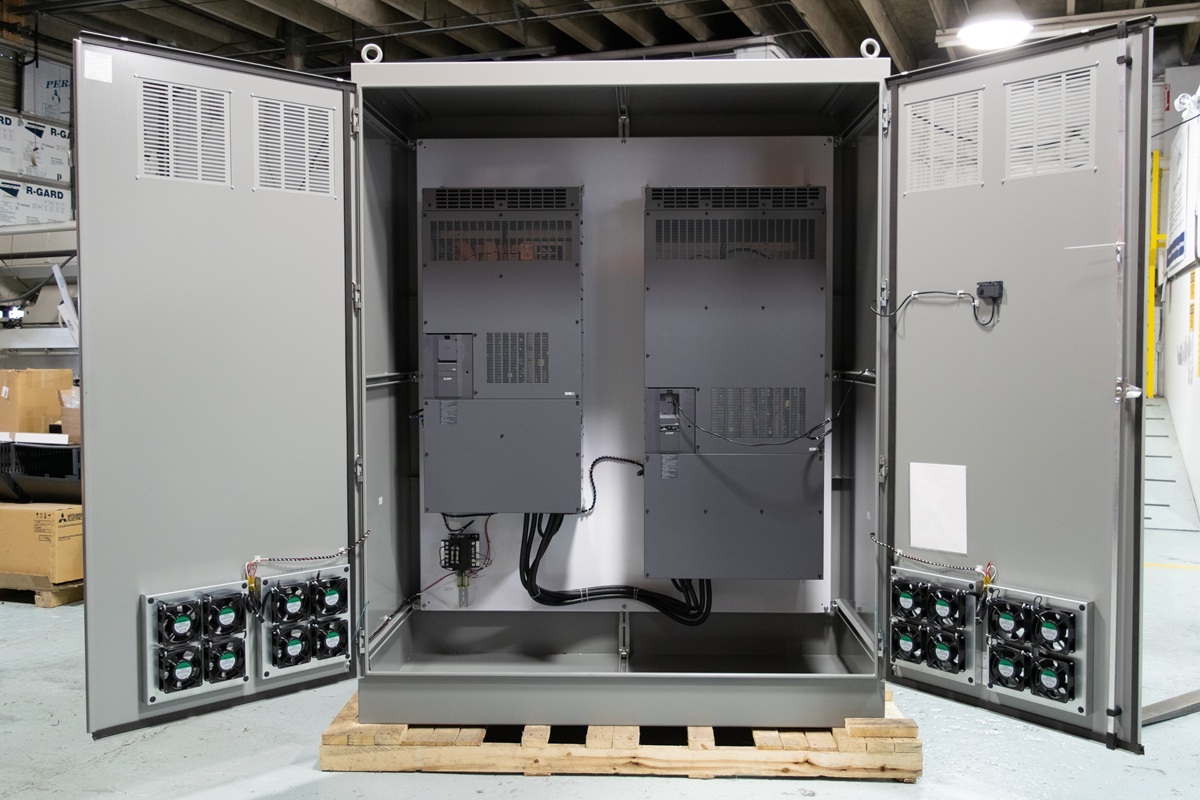
Mitsubishi Two Piece VFD
One last consideration with installation is cooling. Drives and their accessories create heat, and a large drive in a small room can become a problem. Is there enough cooling in your electrical room? Is the room big enough to give the required clearance around the VFD so it can cool itself?
Site Capability
Adding small devices to an electrical system typically isn’t a problem, but bigger drives can encounter issues if they weren’t originally accounted for. This may happen when retrofitting a VFD into a system that used to be across the line, or when adding an entirely new motor system with a VFD.
Start with the available electrical capacity. Can the utility service, facility transformer, switchgear, and distribution system support the additional load? Options to address this may require new equipment or coordination with the electrical utility.
What about inside your facility? Do you have the right disconnect, breaker, or fusing? What conductor sizes are required? What is the available fault current, and does the VFD have an adequate SCCR? Will the changes require updates to breaker coordination or arc flash studies?
If the changes start to add up, should you take a step back and look at more solutions? If the drive is big enough and you already need to upgrade a lot of equipment, should you investigate medium voltage options as a better solution?
Harmonic Mitigation
Harmonics are something you should always consider with a VFD, but they become more important with bigger drives. Even if the distortion percentage remains the same, a bigger drive creates more harmonic current than a smaller drive, meaning more effect on your system. The IEEE 519 standard is based on measurements at the point of common coupling (PCC). In general terms, this means the utility cares about a facility’s total harmonics and not the harmonics at each panel. When you look at an entire facility, addressing the harmonics created from one large drive is often more effective than tackling many small drives.
Because large drives are a larger portion of their facility, this is where many start to look beyond just a reactor. Specifications will often call for them to meet 12% or 15% harmonics, meaning that options like a passive harmonic filter are common to be compliant. These devices can be built into a panel with the VFD or sold separately, giving options.
Many larger drives already have a reactor, you also may have an option to use an active harmonic filter (AHF). A reactor combined with an AHF can be a great option for ultra-low harmonics and may also be able to help with power factor correction depending on the setup.
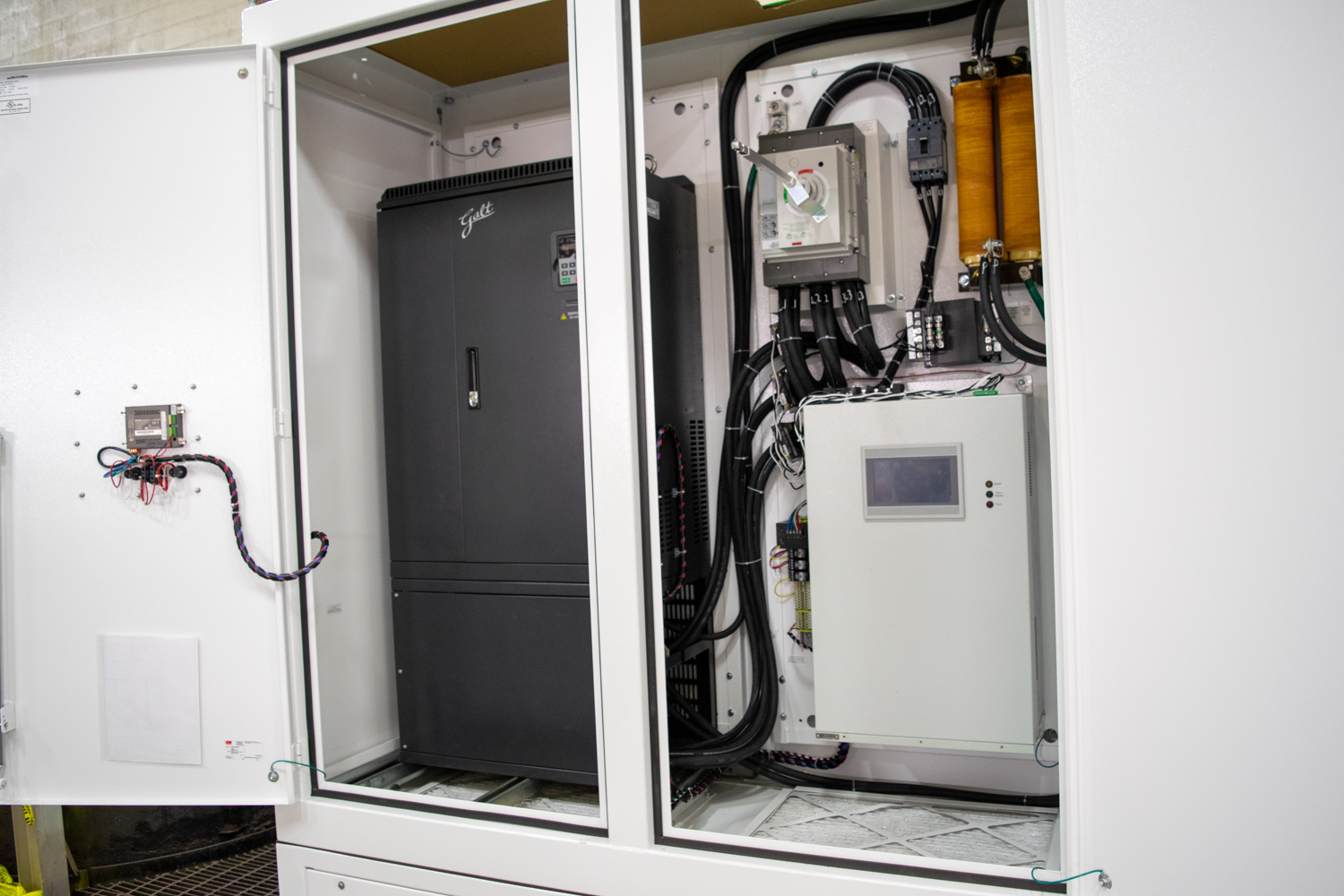
Galt VFD with Static Var Generator
Output Filtering
Just like harmonics, output filters to prevent dV/dt and common mode should always be considered, but the stakes become higher with a bigger drive. While bigger drives are not more likely to create these issues, the cost of fixing them goes up. There are plenty of factors to consider, from cable length to motor insulation, even down to the motor bearing design and whether cables are submerged. These factors add to the risk of an issue, meaning output filtering is not a black and white decision.
With a complicated decision process, it often helps to look at the risk of not filtering. A larger drive will control a larger motor, and those motors are more likely to be expensive, application-specific, or difficult to source quickly. That means a motor failure is a bigger deal and the cost to prevent those failures makes more sense. Although it’s not a foolproof insurance policy, adding output reactors, dV/dt filters, or sinewave filters to a large drive can add extra reliability to what is likely a critical and difficult to repair application.
Get Help on the Big Projects
With larger drives, the stakes get higher. Large VFDs control the most critical processes, and mistakes can create expensive downtime, installation changes, or equipment failures. Getting the system right the first time becomes much more important.
The VFDs.com team works with large low voltage VFD applications every day. We can help you select the right drive, accessories, filtering, and configuration for your application while avoiding costly surprises during installation.
Contact us here or call us at 1-800-800-2261 to get help finding the equipment that works for your facility.