
VFD Panel Design Considerations
Although variable frequency drive panels can be a standard product, they are often custom designed based on specific site and application needs. Just because a panel can work for an application doesn’t mean it’s the best design for performance, reliability, or maintainability. This design isn’t as simple as just picking a VFD chassis brand that you like and finding a big enough box to put it in.
VFD panel design includes many aspects, such as physical space, controls setup, temperature management, electrical capacity, required certifications, and ongoing maintenance and repairs. In this article, we’ll look at each of these considerations so you know what to address before a panel is engineered, ordered, and installed.
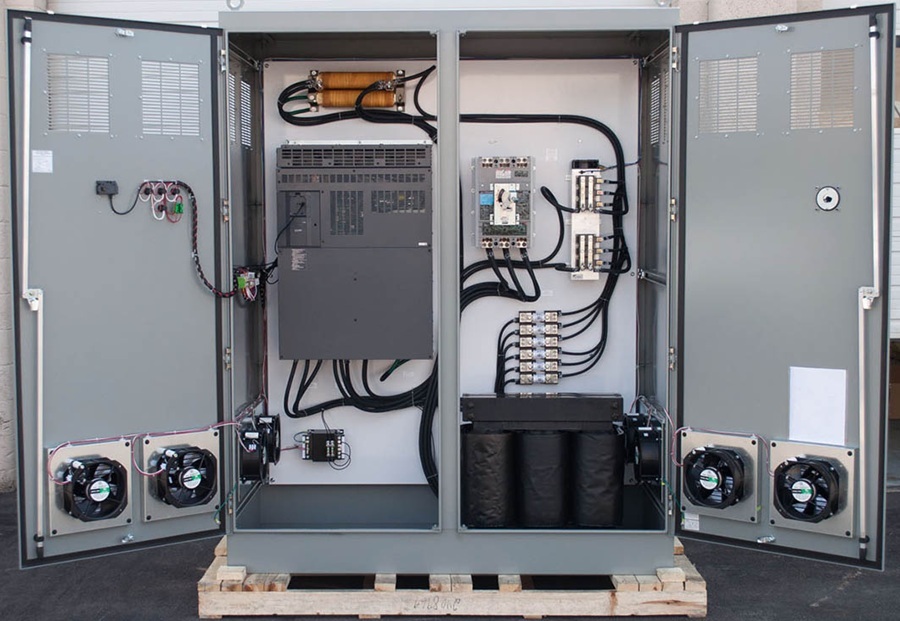 Panel loaded onto pallet for shipping
Loading, Mounting, and Cable Entries
Physically transporting and installing a VFD panel is a critical barrier in many cases. Does the right equipment exist on site to move the panel, and can it fit where it needs to? Panels may need provisions for forklifts, crane lifting bolts, or other components to make them safe and easy to get into place.
Once in the correct place, how and where it’s mounted is also important. Panels may have a strange weight distribution. Although it’s ideal to have heavier components toward the bottom, for proper cooling or to minimize the footprint, some panels may end up top-heavy and need to be properly mounted and secured. Larger freestanding panels may require consideration of floor loading, housekeeping pads, anchor locations, or wall structure before installation.
The mounting location also needs to preserve appropriate ventilation clearance and enough working space to access doors, removable panels, observation windows, disconnects, and controls. If future expansion is possible at the site, leave room for additional panels and their required working and ventilation clearances.
One aspect of clearance that can often be missed is cable entry. Panels may have top, bottom, back, or side entry for cables, and many facilities have cable trays or conduit that needs to be adjusted for this. This may be able to be changed during the engineering and submittal process, but constraints on space within a panel may limit options for where cables can enter and exit. Few things are as frustrating to a team trying to install a panel as trying to get cable to bend and go into spaces that don’t leave enough room, so make sure those details are lined up.
Don’t stop at just planning for the power cables. Control cables usually need separate conduit or trays and may have a different entrance. Not only does the panel need to be capable of communicating with a PLC, SCADA, or BMS, but it needs to be able to connect to it. Any external controls, operator interfaces, or feedback devices, such as Hand-Off-Auto (HOA) switches, HMI screens, or pressure transducers also need a plan for their connections and accessibility.
Heating and Cooling
Panels are often used to provide convenience in a complicated system. One package supplies a VFD, filtering, controls, and all the components necessary for that application. The downside is that placing all those heat-producing components inside one enclosure can make temperature management more difficult. In dirty, corrosive, or otherwise harsh environments, isolating components from the surrounding air may actually be beneficial. In most cases, it means that time needs to be spent addressing the temperature of the panel.
Panel design will include calculations based on the total heat load generated within the panel, the ambient temperature, airflow throughout the panel, and even considerations such as elevation and humidity. All of these will affect whether the panel can keep its components within their allowable operating temperature range.
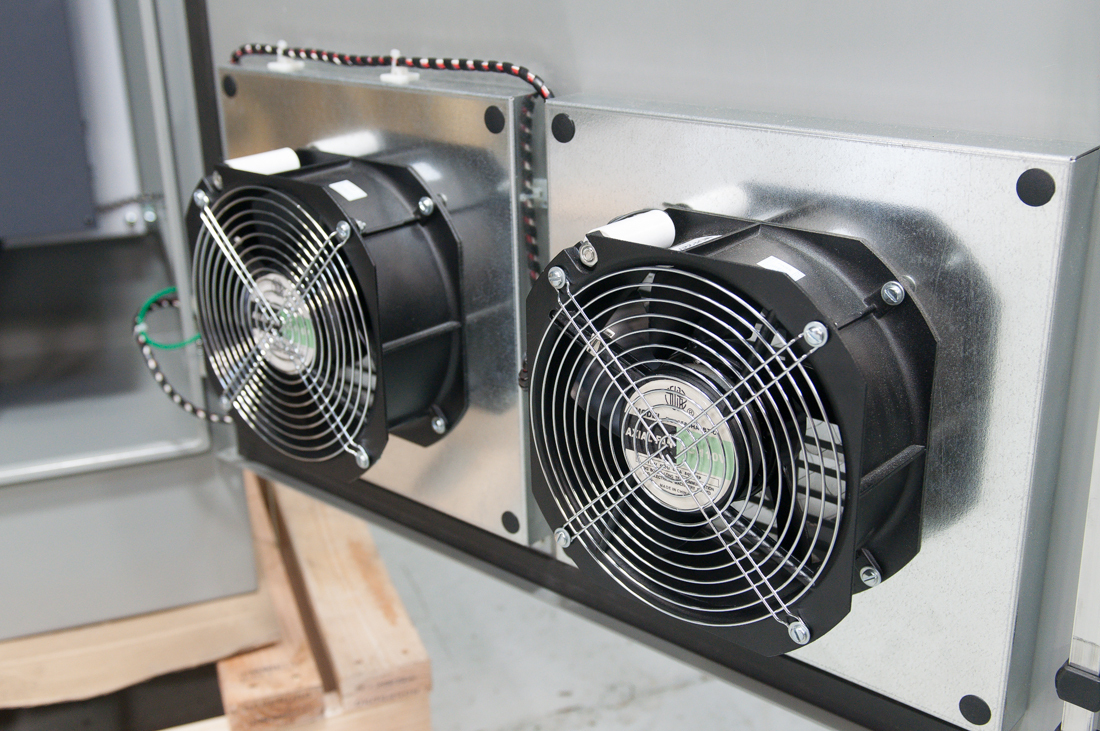
There’s a variety of ways to handle these issues, often used in conjunction with each other to get the best results. The drive and components may be derated or oversized to reduce the load relative to the capability of the equipment. Extra airflow may be added for better cooling. Air conditioners, heat exchangers, or heaters may also be added depending on the enclosure and environment. The layout and clearance of components within the panel can affect heat distribution. You can even consider simple matters like installing sunshades on outdoor panels to reduce direct sunlight and reduce solar heat gain, or cooling the room for indoor panels rather than addressing heat at the panel itself.
Ratings and Certifications
Some of the most important ratings within a panel are those of the electrical components, particularly the VFD itself. For example, the MDI SV1 panel is often used in HVAC applications where a lighter overload drive is appropriate. If heavy overload is needed, the drive isn’t the only component that may need to be changed. Conductors, disconnects, fuses, reactors, bypasses, and even heat dissipation all may need to be redesigned to meet the needs of different applications.
The other crucial rating is environmental protection. Whether using the NEMA or IP rating system, accounting for the hazards of your location is crucial. This may be easy, such as typical outdoor applications being handled through a design such as the MDI F3R series with gasketed doors, control covers, and vent hoods to prevent rain ingress. That doesn’t make a standard enclosure like this appropriate for especially cold, hot, corrosive, or dusty environments, or for environments where panels will be sprayed down.
In some situations, a solution that doesn’t fit the standard system may be appropriate. The MDI FF1 series, for example, is a NEMA 1 rated system that has many of the characteristics of a NEMA 12 system. It uses filtered intake fans to maintain positive pressure inside the enclosure, reducing dust intrusion through vents and other openings. This can be useful for mildly dusty environments where you still need to allow the maximum amount of airflow through the panel for cooling, such as in warmer environments.
The final category of ratings has to do with certifications. UL, CSA, or other certifications may be required at a facility by specification or for other reasons. Panels requiring a specific listing or certification generally need to be built by a shop authorized to apply that certification mark. Field work may require an electrical contractor license. Field retrofits and modifications can affect the original listing and may require a field inspection to stay certified. All these considerations make the partners and vendors you work with a more important decision.
Hazardous location applications add another layer of requirements. Depending on the environment, this may involve classified-location equipment, purged or pressurized enclosures, intrinsically safe circuits, or other specialized engineering.
Short-circuit current ratings (SCCR) are another important consideration. The panel needs to be suitable for the available fault current at the installation point. The panel’s SCCR can be limited by the lowest-rated component or combination in the power circuit, and changing fuses, breakers, contactors, bypass components, or other devices may change the overall rating.
Maintenance, Component Failures, and Spare Parts
Planning for the maintenance of a VFD panel can save time and headaches down the road. It also can reduce overall cost and downtime while increasing reliability and product lifespan. The design of a panel can mean that the entire system must be taken down for maintenance. Careful design can reduce how often that becomes necessary.
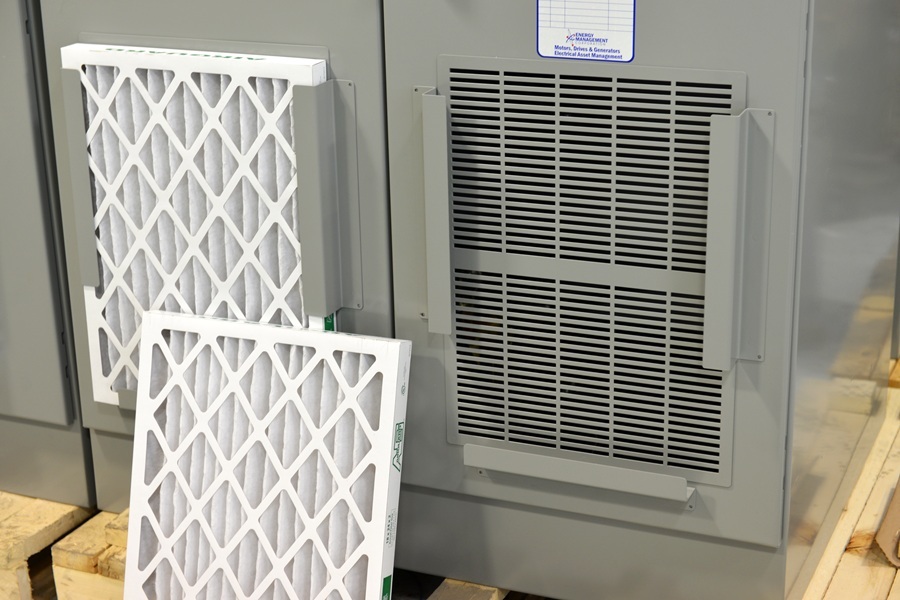
Arranging a bypass in a separate cabinet so a panel can be maintained is one way to do this, although not all bypass arrangements can make this safe. Another simple design is to place air filters outside the panel where they are easy to monitor and clean or replace without opening the panel itself.
This isn’t where the design stops. Talk to the technicians who work with this equipment every day and find out what their major headaches are, then see if there’s a way to engineer solutions. Maybe this means extra spacing between components, replaceable fans, clearer labeling on terminals, additional lighting or service receptacles, spare parts, or even component mounting that makes common replacement parts easier to remove and replace.
In this same vein, the damage and downtime from component failures may be able to be reduced with the right engineering. Look at bypass, for example. A bypass only provides useful redundancy if the failure that disables the VFD does not also disable the bypass path. A traditional contactor bypass can provide a physically separate power path around the drive, while some integrated designs still share controls, protection, or other components that can become common points of failure.
Harmonic mitigation creates a similar design decision. A 12- or 18-pulse system relies on its phase-shifting transformer and multiple rectifier sections to achieve the desired harmonic performance. With an external passive or active harmonic filter, the filtering equipment becomes a separate subsystem. Depending on the design and application requirements, it may be possible to bypass a failed filter temporarily and continue operating the VFD without full harmonic mitigation. Be aware that operating this way may not comply with utility requirements, facility standards, project specifications, or harmonic limits.
These plans can also include necessary spare parts, including parts that are simple or cheap to stock, as well as others that are critical or hard to find. Standardizing drives, contactors, fans, filters, fuses, control power supplies, and other components across multiple panels can reduce the number of unique spares a facility needs to stock. A similar design and compatibility can save money, storage space, and time when dealing with an emergency failure.
Get the Right Engineering Help
VFDs are a specialized area that many electrical engineers only work with occasionally. The engineers at VFDs.com work with VFD panels every day and have experience designing systems around a wide range of applications, environments, controls, and facility requirements.
As panels become larger or more customized, small design decisions can have a major impact on installation, reliability, serviceability, and long-term cost. Working through those details during the engineering process is much easier than solving them after the panel arrives on site.
If you’re planning a new VFD panel or working through a difficult application, speak with the experts at VFDs.com about the requirements before the design is finalized. Send us a question here, or call us at 1-800-800-2261.